Webinar recap: Improving access to high-quality protein through technical assistance
When smallholder farmers and traders receive practical, well-designed technical assistance (TA), they become more productive and more commercially engaged. Their growth drives the growth of the agribusinesses that serve them, which in turn widens access to high-quality animal protein in low-income communities. That was the central message from AgDevCo's recent knowledge-sharing webinar, Improving access to high-quality protein through technical assistance: insights from the poultry and aquaculture sectors, co-hosted with TechnoServe.
The session brought together four businesses working across poultry and aquaculture value chains in Mozambique, Uganda, Kenya, Rwanda and Tanzania to share how TA, alongside investment, supports the farmers and traders they work with.
Why animal-source protein matters
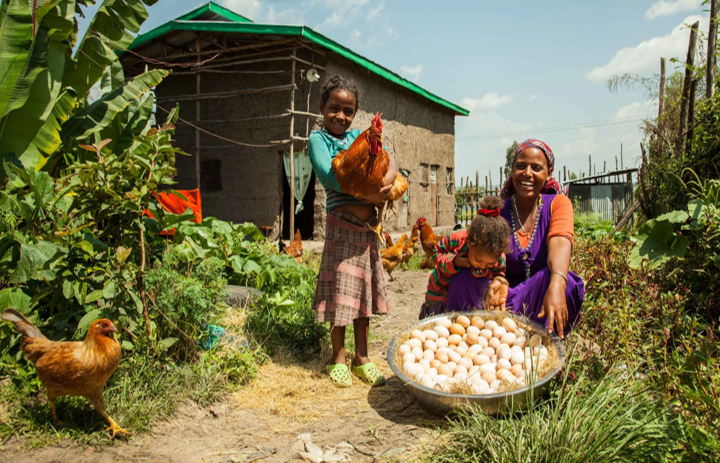
Opening the session, Amy Cuff, AgDevCo’s Senior ESG Manager, noted that while global debate often focuses on the overconsumption of meat, sub-Saharan Africa faces a different challenge: malnutrition, against a backdrop of much-needed economic development. AgDevCo invests in poultry and aquaculture businesses across the region that strengthen the supply of high-quality animal-source protein to low-income communities. These businesses also create employment with significant participation by women, supporting income generation and economic resilience for smallholder farming households.
Poultry and aquaculture are also among the most carbon-efficient sources of animal protein. AgDevCo’s webinar series explores the impact of these protein value chains on livelihoods, nutrition and the environment. This session focused on livelihoods: why animal protein matters for farmers and traders, and how TA can deepen the support businesses provide to them.
The speakers
The panel brought together perspectives from across the poultry and aquaculture value chains:
- Jamila Patel, General Manager, Transurban (Mozambique)
- Andrew Barasa, Head of Customer Insights and Sales Analytics, Hatch Africa (Uganda)
- Sarah Benhamo, Group Communications Director, Victory Group (Kenya and Rwanda)
- Alex Chetkovich, Managing Director, Tanganyika Blue (Tanzania)
The session was moderated by AgDevCo's Shannon Wangwe, TAF Analyst, Bianca Dempers, Impact Manager; and Amy Cuff, Senior ESG Manager.
Key takeaways
Five messages emerged from the case study, the panel discussion and the comments shared by participants.
1. Agribusiness-led TA delivers results for farmers and businesses
AgDevCo's case study, Improving Smallholder Poultry Productivity, presented by Bianca Dempers, draws on external M&E assessments of three TA interventions with Transurban and Uzima Uganda between 2021 and 2025, supported by AgDevCo's Technical Assistance Facility.
Across all three interventions, farmers adopted more good practices, with the strongest gains in feeding, brooding, vaccination and record-keeping. Those who received the most intensive training scaled up, placing larger chick orders and increasing both revenue and profit. In Uganda, almost all Uzima respondents reported higher incomes and better household diets as a result of TA support and engagement.
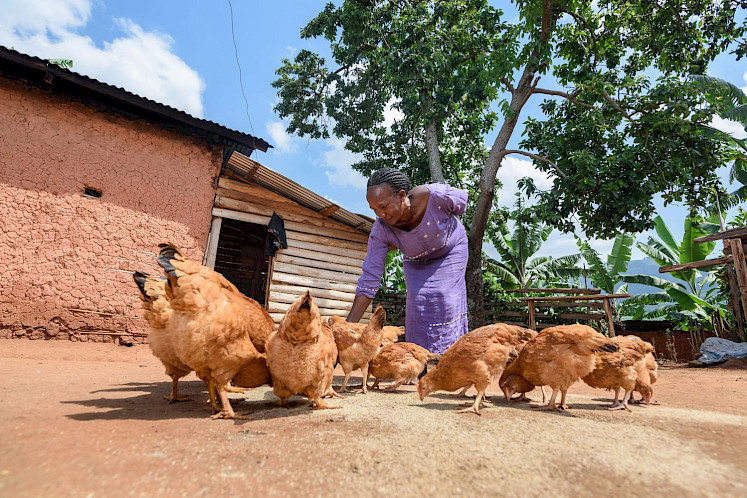
Jamila Patel described what this looks like on the ground. When farmers, particularly women, understand the basics of managing their business, she explained, "instead of placing 100 chicks, at the next placement they grow to 150, and by the end of the year they have grown their business exponentially."
For the businesses, these gains are commercial as well as developmental. Andrew Barasa reported that trained agents increased their order sizes, smallholders ordered more frequently, and some farmers went on to become agents themselves. Hatch has since built these practices into how it onboards new agents, recognising that training is a continuous process rather than a one-off project.
2. Customers' success underpins business success
With day-old chicks and tilapia, these businesses largely sell to other businesses: agents, smallholder farmers and market traders. Operating in this B2B space means their customers' profitability is fundamental to their own, and it is these customers who ultimately carry affordable protein to low-income consumers.
For Jamila Patel, "once they grow their business, we also grow our business." Andrew explained that Hatch expects the agribusinesses it works with to grow alongside it, so removing the barriers that hold them back is central to the model. Alex Chetkovich described Tanzania's Mama Lishe fish traders simply: "their success is our success."
This is why TA is most effective when it is led by the agribusiness itself and focused on the customers who drive its sales.
3. Support must be designed with women in mind
The case study found that women made the largest gains in practice adoption, yet many could not attend multi-day training at a central venue because of household responsibilities and mobility constraints. Both Transurban and Uzima have since moved to shorter, village-based training, which has increased women's participation.
Andrew described what works in practice: training through existing savings groups, women's circles and religious groups; partnering with local government gender offices; keeping sessions short; allowing women to bring their children; and having agents host training at home. He also noted that while a man may be registered as the customer, it is often a woman caring for the birds.
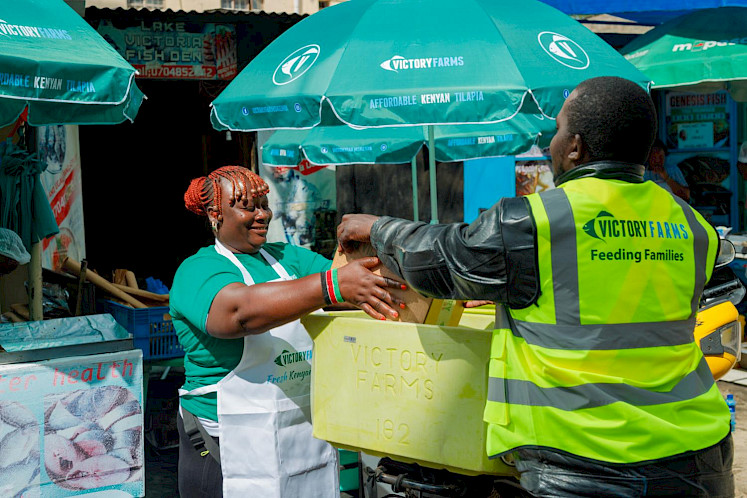
For Victory Group, women are central to the model. Sarah Benhamo described how Lake Victoria's fish trade was once marked by a severe power imbalance that left women traders open to exploitation. Reliable access to fish through Victory's branches, combined with training and peer mentoring, has helped the Mama Samaki network grow to over 20,000 women, some of whom now run several outlets and employ others.
4. TA works best alongside investment and a supportive enabling environment
The case study is clear that training alone has limits. Low-cost practices such as feeding, brooding and record-keeping were adopted most readily, while capital-intensive changes, such as housing upgrades and biosecurity equipment, needed support beyond training. Stable input supply also matters: in Mozambique, vaccine shortages and border closures constrained results even where farm-level practices were improving.
Access to finance is a recurring constraint. Victory Group uses the aggregation of thousands of traders to negotiate fairer microfinance terms, with loans ring-fenced for stock. In Uganda, where a lack of titled land limits lending, Hatch encourages agents to start small and grow progressively. Sustained impact depends on combining behaviour-change support with investment, reliable inputs and deliberate efforts to include women.
5. In pioneering industries, TA can strengthen the whole value chain
In pioneering industries, the businesses that succeed will be those that support and build a complete, commercially viable value chain, not just their own core production, from training and cold chain to market access and farmer integration. Africa doesn't just need more production; it needs more resilient food infrastructure.
The aquaculture panellists showed how TA and investment can help build these links:
• Victory Group used TA to build data systems that help Mama Samaki, who lack cold storage facilities, to buy the right fish sizes and quantities more often, with Victory carrying the spoilage risk through its own cold chain.
• Tanganyika Blue, with TechnoServe's support, is working to make a selective breeding programme for native tilapia commercially viable, benefiting future smallholder producers as well as its own farm.
As Alex Chetkovich put it, the purpose of donor-funded TA is "to move the industry forward", with knowledge shared beyond a single company so that it enters "the bloodstream of the industry."
Q&A highlights
The following questions, drawn from the panel discussion and the audience, have been lightly edited for clarity and length.
Q: How do women traders access finance when the cost of starting or scaling a business is high?
Sarah Benhamo, Victory Group: Traditionally, women approached lenders as individuals, which is not attractive to the financial sector. Through aggregation, the conversation shifts from one woman to 5,000 or 10,000, which brings microlenders to the table. We use that position to negotiate better rates, avoid predatory lending, and design loans used purely for stock, repaid through Victory. This builds the discipline of separating stock money from profit. We are now being approached about insurance and health cover for these women too.
Andrew Barasa, Hatch Africa: When economics make sense, agents and farmers invest. Rather than selling 1,000 birds to an enthusiastic first-time agent who then struggles to find buyers, we encourage people to start small and grow progressively. A key barrier to lending in rural Uganda remains collateral, as most land is customary rather than titled.
Q: Are smallholder poultry farmers using digital tools?
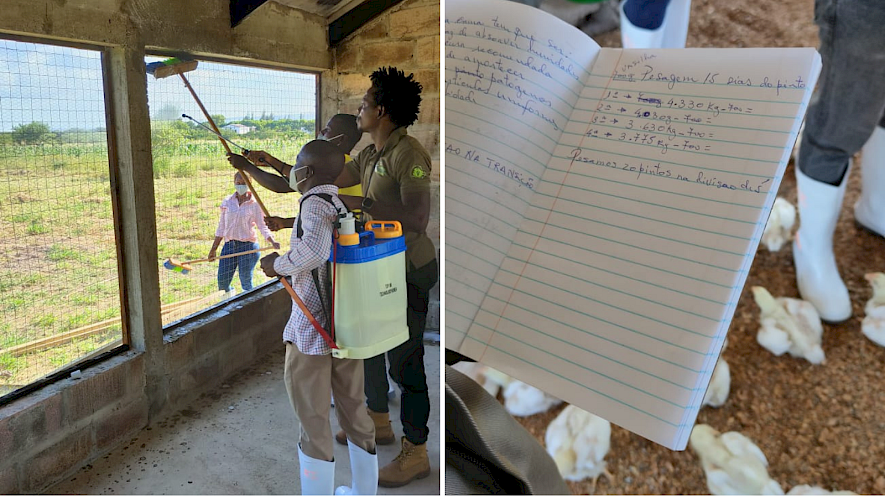
Jamila Patel, Transurban: Uptake is still low in Mozambique. Most farmers have smartphones but keep records on paper. Good record-keeping was a core part of the TA, as it helps farmers track performance and identify when problems such as disease outbreaks begin.
Andrew Barasa, Hatch Africa: We train farmers on why tracking mortality, feed costs and sales matters, and provide tools to help them do it. Hatch is also developing an app for agents to manage their farms and place orders.
Q: What can TA providers and funders do to make TA fit for purpose?
Sarah Benhamo, Victory Group: Be open that funding exists, as many businesses don't know it is available. Investees also need to be honest about where they need help. Our first TA partner encouraged us to be ambitious, and the results have been fantastic for the business.
Alex Chetkovich, Tanganyika Blue: Good TA comes down to programme design and implementation. The question is how to serve both a public good and a private good. With TechnoServe, that meant working out how to embed our breeding programme in a commercially viable structure, so the impact lasts.
Looking ahead
Poultry and aquaculture are uniquely placed to tackle malnutrition in Africa, creating jobs and incomes at every link in the value chain. The webinar showed that TA works best when it is led by the businesses that serve farmers and traders, backed by investment and supported by a stable and enabling environment. Over time, this combination can help pioneering businesses build the commercially viable value chains and resilient food infrastructure Africa needs.
This conversation will continue. A future session in the series will explore the environmental side of protein production, including findings from AgDevCo's lifecycle assessments.
We would like to thank our panellists, Jamila Patel, Andrew Barasa, Sarah Benhamo and Alex Chetkovich, our co-hosts at TechnoServe, and everyone who joined and contributed questions and comments.