Integrated pest management for avocado and macadamia: a toolkit for growers
AgDevCo’s Technical Assistance Facility has published a practical integrated pest management (IPM) toolkit for avocado and macadamia growers in sub-Saharan Africa, with guidance on controlling stink bugs, mirids and other sucking pests while reducing reliance on highly hazardous pesticides.
Download AgDevCo's IPM toolkit here
For avocado and macadamia growers in sub-Saharan Africa, one group of pests can create significant and costly problems. Sucking bugs can cause severe damage to fruit and nuts, and young orchards are particularly vulnerable. For years, growers have relied on broad-spectrum insecticides such as beta-cyfluthrin to control them. But legislators, certification bodies and buyers are tightening restrictions on highly hazardous pesticides. That leaves growers with fewer chemical options and a growing risk of insecticide resistance.
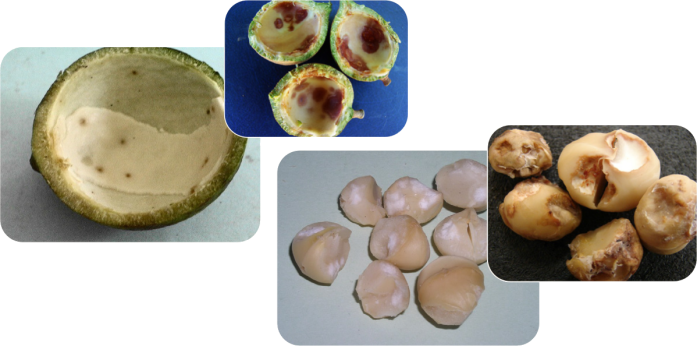
To help growers respond to these pressures, AgDevCo's Technical Assistance Facility (TAF) has developed a practical toolkit on integrated pest management (IPM) for sucking bugs. Its purpose is to help growers reduce their reliance on pesticides while protecting beneficial insects, pollinators, long-term productivity and access to markets.
Who is the toolkit for, and how should it be used?
The toolkit is written for managers, agronomists and technical teams on commercial avocado and macadamia farms. It is designed to be used in two ways: to build an IPM programme from scratch, or to strengthen one that is already in place. Each section stands alone, so users can go straight to the topic they need. Downloadable templates help farms start keeping records, and links to further resources point to more detail. Annexes provide field guides to five key pests: the avo bug (Taylorilygus apiculus), avocado mosquito bug (Helopeltis schoutedeni), stink bugs including the two-spotted stink bug (Bathycoelia distincta), coconut bug (Pseudotheraptus wayi) and macadamia felted coccid (Acanthococcus ironsidei).
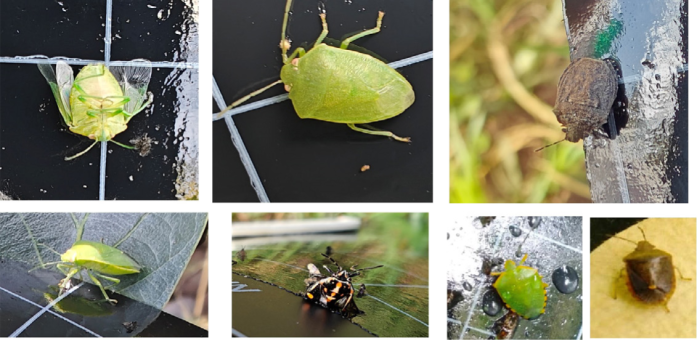
What is the toolkit based on?
The toolkit follows the Food and Agriculture Organization's definition of IPM and is structured around the Pesticide Action Network (PAN) Europe IPM triangle. This approach puts building a healthy, stable orchard first and treats chemical control as a last resort. The guidance is grounded in practice. It draws on on-farm trials with four AgDevCo investees across Tanzania, Kenya and Southern Africa, independent trap trials on commercial macadamia farms in South Africa, and input from IPM product suppliers. The toolkit was edited by Ruth Anita Vaughan, an IPM specialist and Senior Agricultural Advisor to AgDevCo with more than 30 years' experience in African agriculture.
What is integrated pest management, and what does the toolkit cover?
IPM is a structured, ongoing approach that combines a range of methods to keep pests below damaging levels. Done well, it reduces regulatory risk, protects workers and natural pest enemies, slows resistance and, as programmes mature, lowers input costs. The toolkit takes growers through each part of that approach in turn.
Prevention comes first: healthy soils, balanced nutrition, good irrigation and thoughtful orchard design make trees less attractive to pests.
Monitoring and forecasting follow. The toolkit explains how to map pest sources in the wider landscape, scout effectively, and use crop stage, weather data and packhouse reports to judge when action is justified. It also shows growers how to set action thresholds. For avocado, for example, the trigger for intervention is often 20% of flowers infested in a high-yielding year, falling to 10% in a low-yielding year, when each lost fruit costs more.
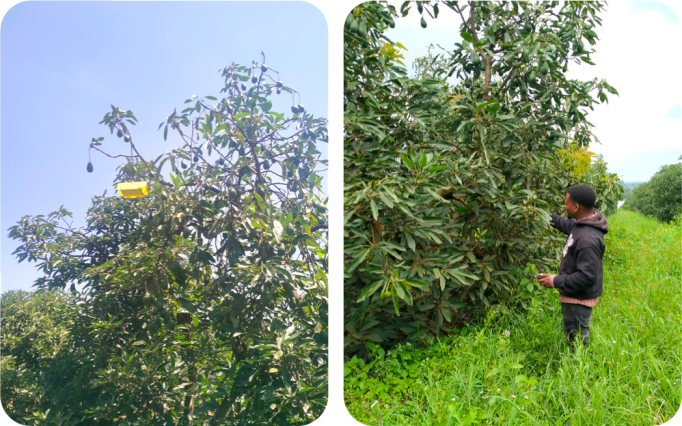
Control then moves from the least to the most disruptive options. It starts with cultural and mechanical methods such as traps, pheromones and pruning. Next come biological controls, including beneficial insects and insect-killing fungi. Chemical control comes last, used carefully in order to protect bees and slow insecticide resistance build-up.
Evaluation closes the cycle. Growers review each season's results and adjust their programme for the next.
Together, these sections give growers a clear, practical route to controlling sucking bugs with fewer chemicals, based on what has worked in African orchards.
Download the integrated pest management toolkit for avocado and macadamia growers here.
Download the IPM toolkit templates:
Avocado fruit damage scouting template
Calculating economic injury level: guide (Word)
Calculating economic injury level: calculator (Excel)